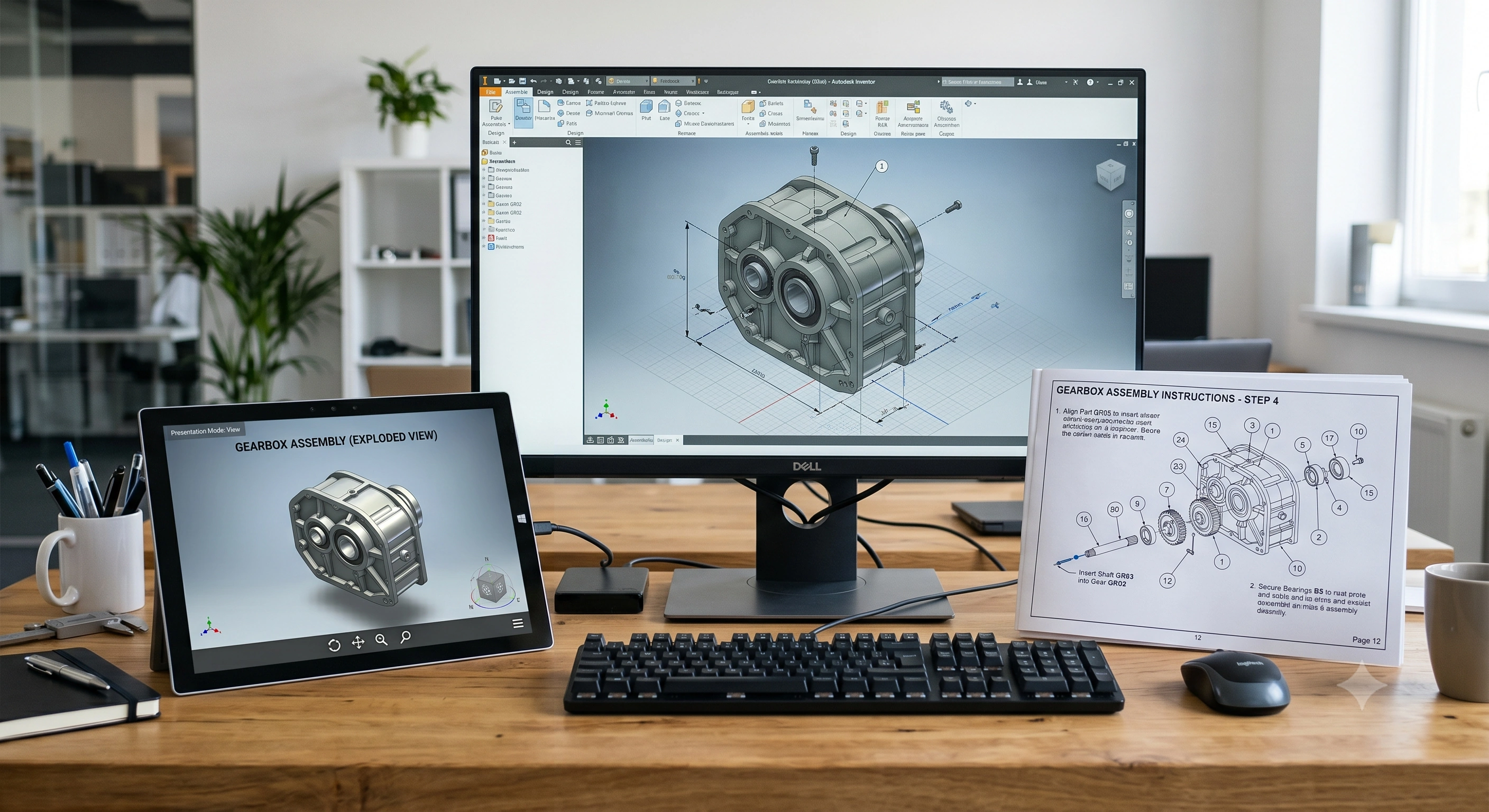
Printed manuals imposed limitations that influenced how information was structured, distributed and consumed. Instructions were organised into pages. Illustrations were fixed. Revision updates required reprinting and redistribution.
Those constraints made sense when paper was the primary delivery mechanism.
The problem is that the audience has changed.
Manufacturing operators increasingly use tablets on the shop floor. Service technicians access information in the field. Customers expect support resources to be available instantly through a mobile device. Yet many organisations continue to produce documentation as if the final destination were a ring binder stored on a shelf.
SOLIDWORKS Composer was an important step forward because it connected technical documentation directly to CAD data. Instead of recreating illustrations manually, authors could generate content from engineering models. This improved accuracy and reduced effort.
However, the final deliverables remain largely static.
A PDF can contain excellent information, but it cannot adapt to the user's situation. It cannot provide alternative viewpoints. It cannot expose hidden components. It cannot respond when a user needs additional context.
This becomes particularly apparent in service environments. Imagine a technician standing in front of unfamiliar equipment. The manual contains the required information, but locating the correct section, confirming the revision level and interpreting the illustrations all take time.
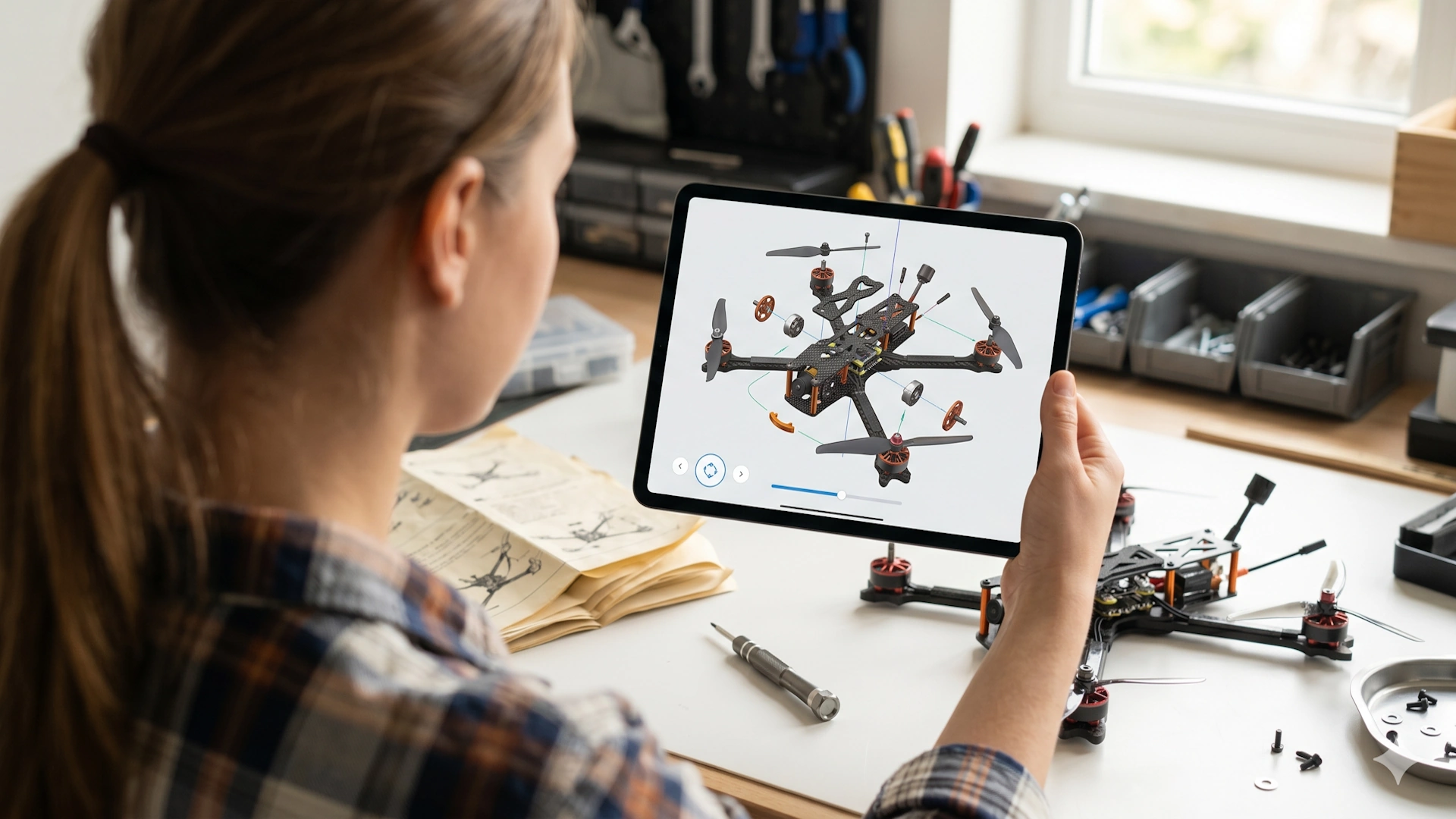
Now imagine the same technician scanning a QR code and opening an interactive 3D procedure showing the exact assembly in question.
The difference is not simply convenience. It fundamentally changes how information is accessed and understood.
Research across field service industries consistently highlights the importance of immediate access to accurate information. Delays caused by searching for documentation increase downtime, reduce productivity and create unnecessary support interactions.
Interactive documentation addresses these issues by treating information as a service rather than a deliverable.
Cadasio enables organisations to publish browser-based instructions directly from CAD-derived content. Rather than distributing files, companies can distribute access. Updates become immediate. Revision control becomes simpler. Users interact with the product model itself rather than relying exclusively on screenshots and diagrams.
For technical authors, this represents a significant shift. Much of the effort traditionally spent creating supplementary views can instead be invested in improving procedures and user guidance.
Static documentation remains useful and will continue to exist for many years. The challenge is that modern users increasingly expect information to be available, searchable and interactive. Documentation practices developed for paper cannot fully satisfy those expectations.
The future of technical communication is not about abandoning engineering discipline. It is about delivering engineering information in a format aligned with how people actually work today.